Heading 2
3/4 TrueMeter's AI: Automating Payments
Feb 17, 2026
Index
For the final step, we don’t just stop at optimization — we close the loop with billing. TrueMeter sets up autopay, manages payment schedules, and continuously monitors performance. When real-world results diverge from forecasts, the system adapts. Every rate plan is continuously re-evaluated.
Each cycle, we:
- Generate reports on usage and costs.
- Reconcile payments to catch errors before they escalate.
- Run a bill settlement process that scales from a handful of bills for a small business to hundreds for an enterprise.
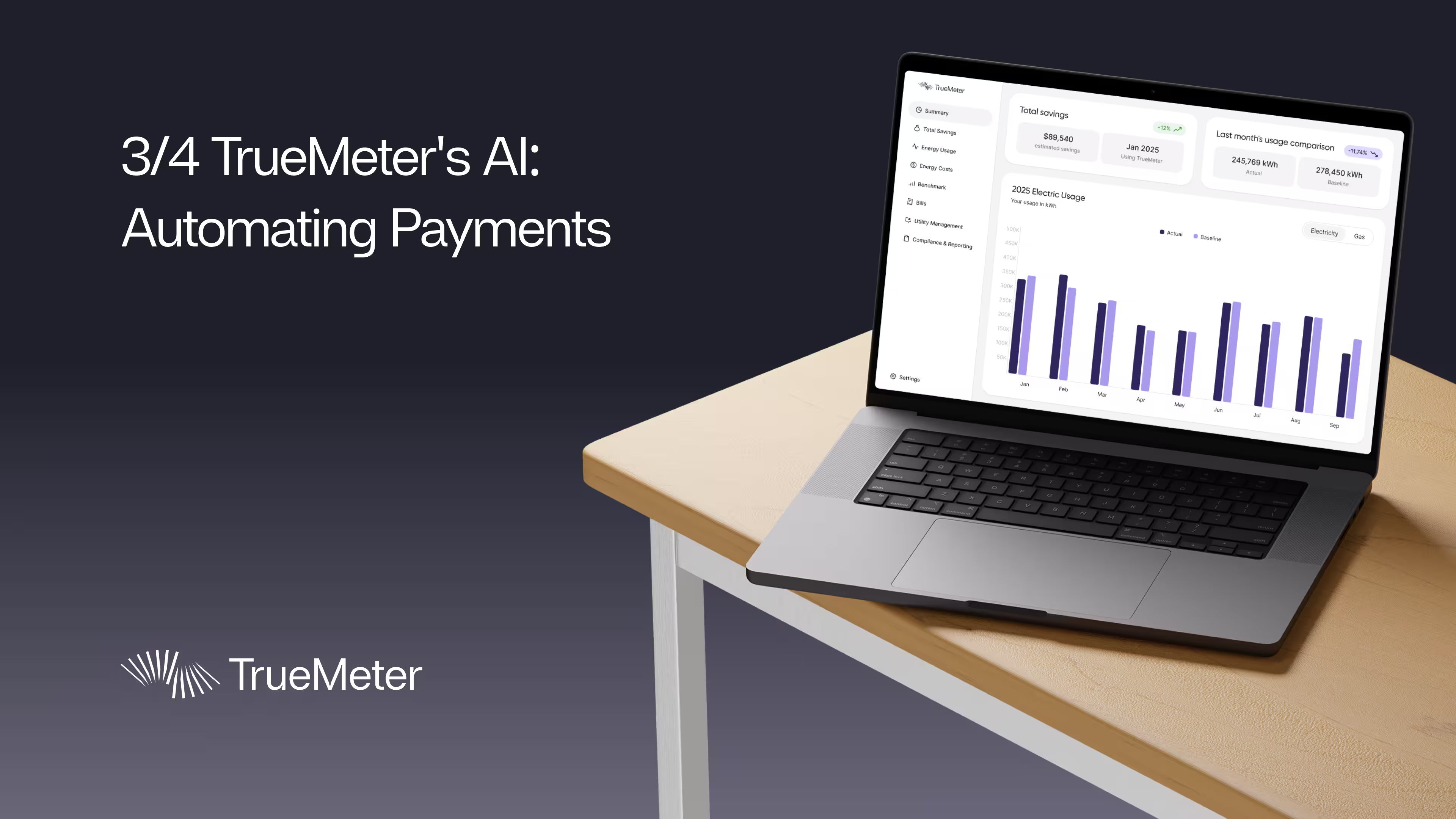
- Provide a unified dashboard summarizing all utility activity, including autopay status and payment histories.
These are not one-and-done optimizations. We continuously loop through rate checks and re-optimizations. If market conditions shift, rates change, or a customer’s usage pattern evolves, the system revisits the decision. When a better option appears, we automatically recommend and execute another switch. It’s a loop that never truly ends — because energy markets, policy incentives, and business needs never stop changing.
Finally, our bill settlement process brings order to scale. Whether it’s ten invoices or ten thousand, everything is consolidated into a single clean view. Customers don’t have to worry about missed due dates or late fees, because autopay and monitoring ensure bills are handled on time, every time. And while it may not look glamorous under the hood, the payoff is simple and powerful: a streamlined, accurate, and proactive system that keeps energy costs under control and fully transparent.
Share article
Resources
Learn more about energy savings
Stay up to date with our latest publications.
TrueMeter: AI Energy Agent That Optimizes Utility Bills
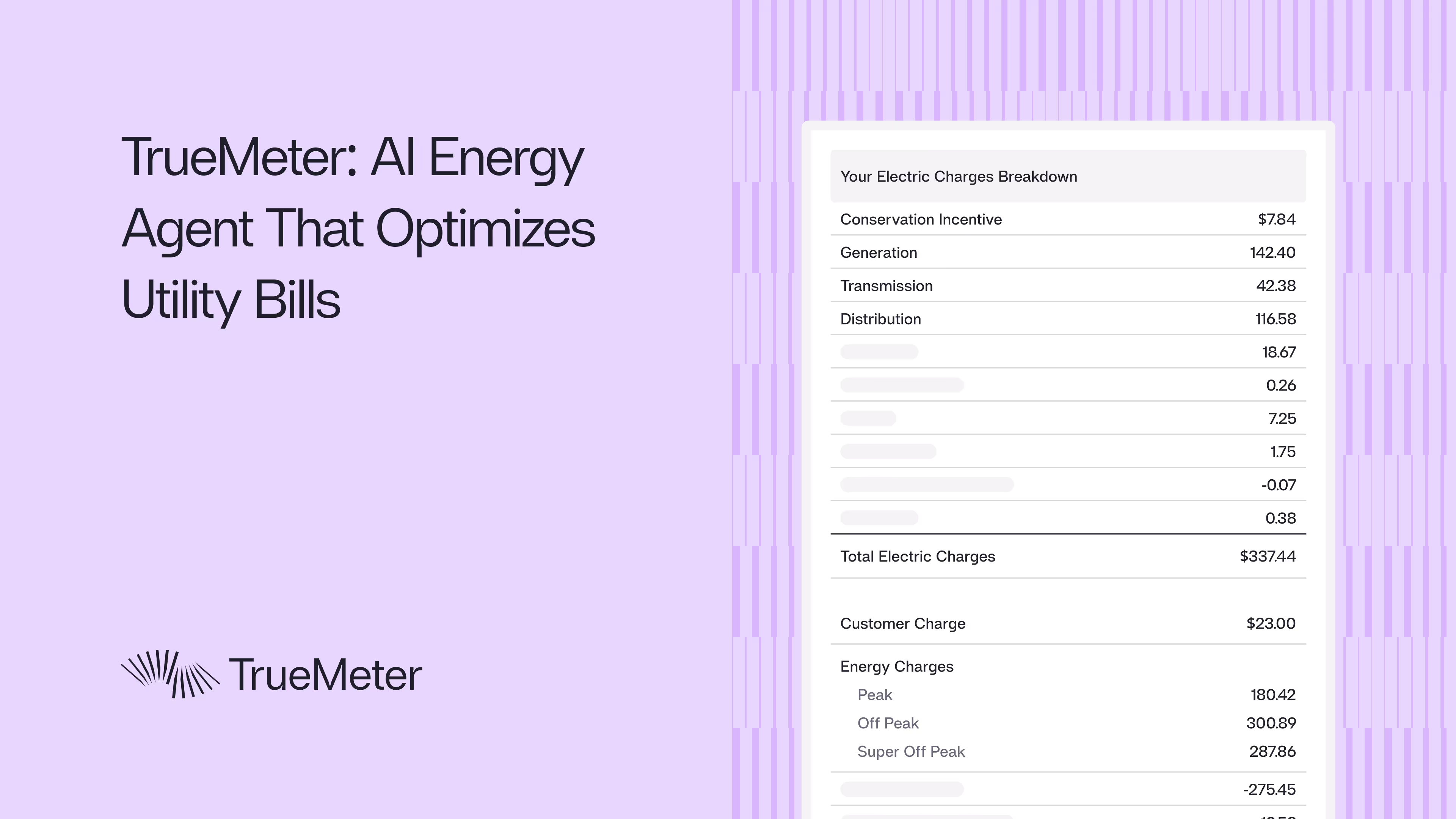
Ever looked at your utility bill? It’s packed with arcane terms: franchise fee surcharge, conservation incentive, electric public purpose, power charge indifference adjustment, on-peak, off-peak, super-off-peak… It might as well be ancient Sumerian. And those are just the line items. Each utility, each energy provider has its own tariffs, schedules, riders, and incentives. Add in the fact that the data comes in inconsistent, non-tabular formats, and parsing it is a nightmare.
Engineers
26 Nov 2025
|
15 mins